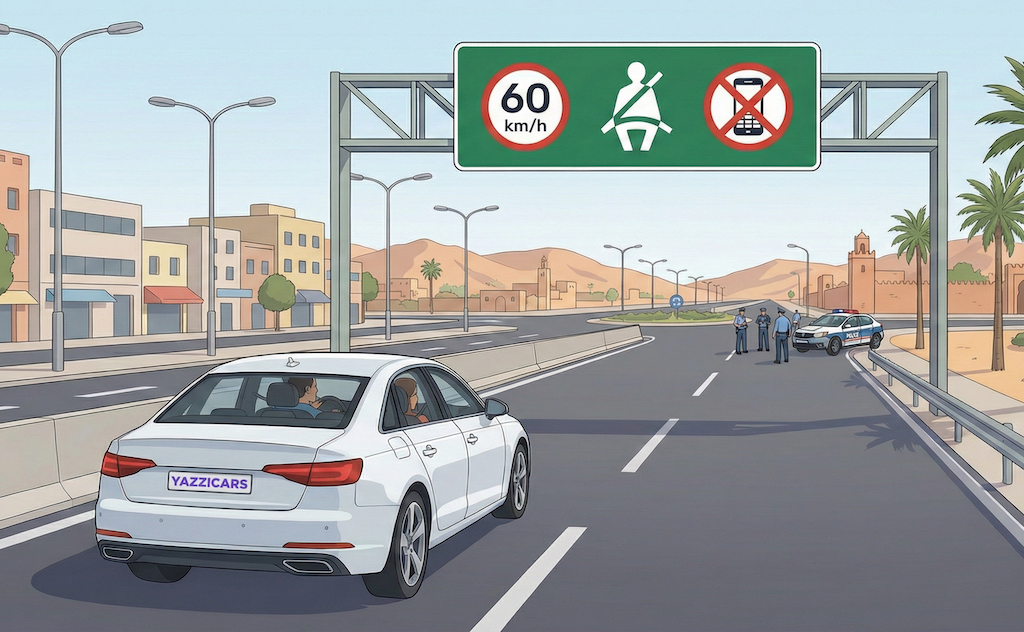

Driving in Morocco guide is one of the best guide and ways to explore the country. From modern highways to mountain roads and coastal routes, having a car gives you freedom and flexibility. However, traffic regulations in Morocco continue to evolve, and drivers in 2026 must be more attentive than ever.
This Driving in Morocco guide explains the five most important traffic rule updates and enforcement changes you must know. Whether you are a tourist, expatriate, or business traveler, understanding these rules will help you avoid fines, protect your license, and drive with confidence.
Why Understanding Traffic Rules in Morocco Matters
Morocco has significantly invested in road safety, traffic monitoring, and law enforcement over recent years. As a result:
- Traffic laws are more strictly enforced
- Fines are applied immediately in many cases
- Speed controls are more frequent and accurate
- Foreign drivers are treated the same as local drivers
Therefore, knowing the rules is not optional—it is essential.
1. Stricter Speed Limit Enforcement Across All Roads
Speed limits in Morocco have not dramatically changed, but enforcement has become much stricter, especially entering 2026.
Official Speed Limits in Morocco (Still Valid in 2026)
- Urban areas: 60 km/h
- Secondary roads: 80–100 km/h (depending on signage)
- Highways: 120 km/h
What has changed is how speed is monitored.
What Drivers Must Know
- Fixed radar cameras are now more common
- Mobile radar units are frequently used
- Speed checks are common at city entrances
- Tolerance margins are minimal
Even small speed violations can result in immediate fines.
Tip: Always slow down before city limits, even if traffic appears to be moving faster.
2. On-the-Spot Traffic Fines Are More Common
One of the most important changes affecting drivers is how Morocco traffic fines are issued.
What Has Changed
- Police officers increasingly issue fines on the spot
- Payment is often required immediately
- Receipts are mandatory and provided
This applies equally to local and foreign drivers.
Typical Fines Include
- Speeding
- Not wearing a seatbelt
- Using a mobile phone while driving
- Ignoring traffic signs
If you are renting a car, unpaid fines can be charged later through the rental company, often with additional administrative fees.
3. Driving License Requirements Are More Carefully Checked
License requirements themselves remain stable, but checks are more frequent and more systematic.
Valid License Rules in 2026
You can legally drive in Morocco if you have:
- A valid national driving license (Latin alphabet preferred), or
- An International Driving Permit (recommended), or
- A Moroccan driving license
Tourists can generally drive for up to one year using a foreign license.
Important Notes
- Licenses must be valid (not expired)
- Photocopies are not accepted during police checks
- The license must match the vehicle category
Best practice: Always carry your original license and passport while driving.
4. Zero Tolerance Toward Dangerous Driving Behaviors
Moroccan authorities are applying much stricter penalties for behaviors considered dangerous.
High-Risk Violations in 2026
- Using a mobile phone while driving
- Not wearing a seatbelt (front and rear seats)
- Running red lights
- Dangerous overtaking
- Driving under the influence of alcohol
Even minor violations can lead to:
- High fines
- Temporary license confiscation
- Vehicle immobilization in serious cases
Morocco maintains a very low legal alcohol tolerance, and enforcement is strict.
5. Increased Controls in Cities and Tourist Areas
If you are driving in major cities like Marrakech, Casablanca, or Rabat, you should expect more frequent checkpoints.
Where Controls Are Most Common
- City entrances and exits
- Tourist zones
- Highway toll areas
- Near government buildings
These checks are routine and usually quick if documents are in order.
Practical Driving Tips for Morocco in 2026
To drive safely and legally in Morocco, follow these essential tips:
- Respect speed limits at all times
- Slow down when entering towns and villages
- Always wear a seatbelt
- Avoid phone use while driving
- Carry all required documents
- Keep cash available for toll roads
Moroccan highways are modern and well maintained, but secondary roads require extra caution, especially at night.
What to Do If You Get a Traffic Fine
If you are stopped by the police:
- Stay calm and respectful
- Ask for the reason clearly
- Request an official receipt
- Pay only the stated fine
- Keep all documents
Never offer unofficial payments. Legitimate fines are transparent and documented.
Driving in Morocco With a Rental Car
Most visitors choose to drive rental cars, which is perfectly legal and common.
Rental companies usually require:
- Valid driving license
- Passport
- Rental contract
Some rentals offer no-deposit options, but fines remain the driver’s responsibility.
Final Thoughts: Drive Informed, Drive Confidently
Driving in Morocco in 2026 is safe and enjoyable if you understand the rules and respect enforcement. The country continues to improve road safety, and compliance is taken seriously.
By following this Driving in Morocco guide, respecting speed limits, and understanding Morocco traffic fines, you can avoid problems and enjoy your journey with confidence.
Preparation is the key to a smooth driving experience—on Moroccan roads, knowledge truly protects you.